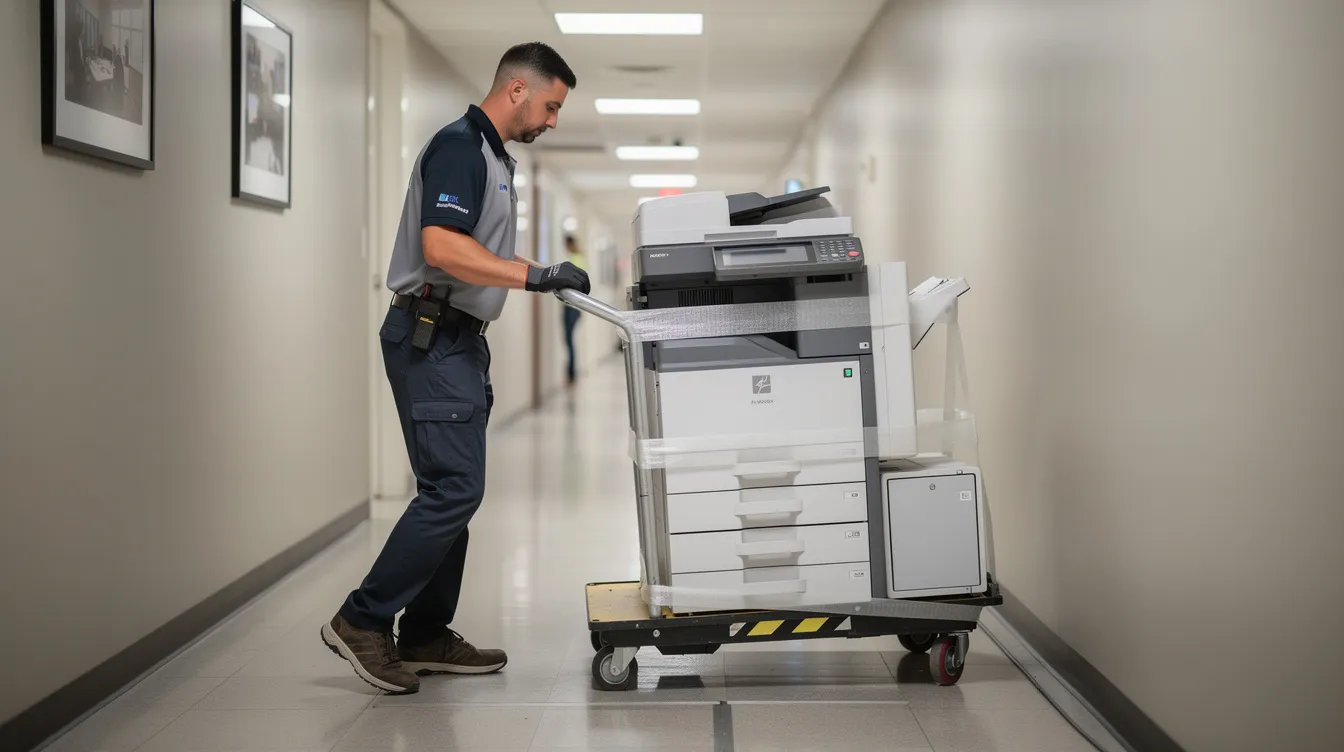
The copier quote said $149 a month. Three years later, you’re staring at an invoice for another 12 months you never agreed to, plus a $450 “return and restocking” charge to get the machine out of your office. Sound familiar?
A copier rental vs lease fine print comparison comes down to one point: leases look cheaper per month but lock you in, while rentals cost more per month but let you leave. The real cost of a lease hides in four places: auto-renewal, early termination, return freight and restocking, and the separate service contract.
At Clear Choice Technical Services, we service and replace copiers for businesses stuck in these contracts every week. Here’s what we see in the fine print, and how to protect yourself.
TL;DR: Copier leases usually look cheaper monthly but hide long-term liabilities in escalation clauses, auto-renew windows, end-of-lease return freight and restocking charges, and strict early-termination rules. Copier rental agreements may include higher monthly rates compared to leases, but they are typically month-to-month, include service and toner, avoid non-renewal traps, and let you return or right-size office equipment with 30 days’ notice. In any copier rental vs lease fine print comparison, the safest choice for cash flow depends on contract length, monthly print volume predictability, and whether the fine print clearly caps all extra fees in writing.
Key Takeaways: Copier Rental vs Lease Fine Print Comparison
Here are the key differences you need to know before signing anything:
- A copier lease is a 36–60 month financing contract with fixed lease payments and specific end-of-term obligations. A copier rental is a short-term, cancellable usage agreement-rental agreements can last from a few days to two years-usually all-inclusive.
- Copier leases commonly include 3–10% annual rate escalations, strict non-renewal notice windows, and “you pay return freight” clauses that can add $1,500 to $3,000 in hidden fees annually.
- Copier rentals bundle ongoing maintenance, parts, toner, and remote support into one predictable monthly fee, with no early buyout penalties and minimal exit conditions. Copier rental is ideal for temporary projects or events.
- Missing the copier lease non-renewal notice window can auto-renew your contract for another 12 months-even if the device is aging equipment running outdated technology.
- Leasing allows for predictable budgeting with fixed monthly payments, access to the latest technology without upfront costs, and leasing typically requires lower upfront costs than buying a copier outright.
- Clear Choice Technical Services favors transparent, all-in pricing for both copier leasing and short-term copier rental, and we spell out escalation caps, return costs, and service coverage in plain English.
Why the “Cheap” Copier Deal Rarely Is
Many businesses discover their copier lease invoice runs 15–30% higher than the original quote because of fine-print escalations and add-ons. In any copier rental vs lease fine print comparison, the monthly rate is the least interesting number on the page-the hidden clauses are what drive your total cost.
Here is the practical difference: leasing agreements lock you into 36–60 months with lower monthly payments but more contract risk. Renting a copier keeps you flexible with a higher cost per month but almost no long term commitment. Leasing converts unpredictable expenses into fixed monthly costs and preserves working capital for other business investments, but only if you understand every line of the contract.
This article, from Clear Choice Technical Services’ perspective as a B2B office equipment and managed print services provider, exposes the fine-print traps, models real-world TCO, and shows how to negotiate lease contracts and rentals that protect your cash flow.

What’s the Real Difference Between Leasing and Renting a Copier?
Leasing a copier is a financing contract-typically 36 to 60 months-where you commit to ongoing lease payments whether you print 500 pages or 50,000. A copier rental is a usage agreement, generally 1–24 months, cancellable on 30–60 days’ notice, with bundled service included.
Most leasing agreements include maintenance and support services, and leasing typically includes extensive maintenance packages for copiers. Leasing agreements often eliminate reactive repair models in favor of preventive care. Leasing also allows access to the latest technology without the full purchase price. Buying a copier provides long-term asset ownership, and ownership through purchase may lead to eventual cost savings-service agreements are sold to 95% of customers purchasing outright to cover repair costs, but you should also weigh multifunction printer model reliability and drawbacks before committing.
Renting a copier typically involves a month-to-month agreement. Copier rentals provide flexibility for seasonal demand increases, and renting copiers avoids long term commitment and storage issues. Businesses can evaluate equipment before committing to a lease, which is especially useful for growing businesses with uncertain growth plans.
Which fits your specific business?
- Headquarters with stable print volume → leasing vs buying may make sense
- Temporary offices, short term project sites, or a temporary location → copier rental
- Fast-growing teams with unknown print needs → hybrid or short initial lease term
Leasing provides flexibility for businesses with changing needs, but only when the lease agreement is structured properly. We support all three models and tailor recommendations based on audited business needs.
The Hidden Trapdoor: 5 Fine-Print Secrets Vendors Hide
Most copier lease fine print protects the vendor’s revenue, not your budget. Rentals tend to be simpler, but still require scrutiny. Here are five traps we see constantly:
1. Annual Escalation Clauses. Service and cost-per-click rates can automatically rise 3–10% each year, buried in the service addendum. On a 48-month copier lease starting at $200/month, a 10% annual escalator can push your payment to roughly $290 by year four.
2. Minimum Volume Tiers and Overage Rates. Contracts set minimum page allotments-say 5,000 black-and-white and 500 color per month. Overages on copier leases can trigger high costs for exceeding print limits, with color overage running $0.07 or more per page. Unused pages rarely roll over. Always audit your current print volume before agreeing.
3. Auto-Renewal (“Evergreen”) Windows. Leases often contain an automatic renewal clause that requires cancellation notice-typically 90 to 180 days before the lease term ends, often via certified mail. What happens if you miss the copier lease non-renewal notice window? You are locked into another 12 months at current or escalated rates. In New York, automatic renewal clauses in service contracts must adhere to specific notice requirements, but many states have fewer protections.
4. End-of-Lease Return Freight and Restocking Charges. When the term ends, you typically pay for insured freight, palletizing, and deinstallation. Expect 300–500 per device plus potential restocking fees. Data security is a concern with copiers that store digital copies of documents-mandatory hard-drive wiping may incur separate charges to properly dispose of sensitive data, and older devices can also present power and hardware failure issues in the field that increase service risk near end of life.
5. Separated Service Agreements. Maintenance and service agreements are often separate from leasing contracts. The leasing company owns the paper while a local dealer handles service, potentially leading to finger-pointing when machines break down. We keep equipment, service, and supplies under one roof-no blame game.
TCO Breakdown: How Do Copier Leases and Rentals Really Add Up Over 3–4 Years?
The true total cost of a copier is base payment plus escalations, service, supplies, and exit fees. A realistic comparison over 36–48 months often narrows the apparent gap between leases and rentals.
The Real Math of a 48-Month Copier Lease (illustrative): Leasing costs typically range from $300 to $500 per month for a full-size color multifunction unit. Start at 300/monthbase.Addmandatoryinsurance(25/month), a 5% annual escalation on service, and $400 in return freight. Over 48 months, your monthly lease payment averages well above the quoted rate. Total leasing costs can exceed purchasing costs over time when you factor in the purchase price of the initial investment versus lease payments. Leasing often includes maintenance and service in monthly payments, which simplifies operating expenses but doesn’t eliminate unexpected expenses from escalation.
The Real Math of a Copier Rental over the same period: a higher base rate-say $400/month-covers hardware, ongoing maintenance, toner, and remote support as one predictable monthly cost. The cost of equipment rentals is typically higher than the cost of leases on a monthly basis, but there are zero buyout penalties or end-of-term freight obligations if the provider picks up the equipment. Over 48 months of rental, you pay more base but avoid the unexpected costs that inflate lease TCO.
Bundled managed print services-remote monitoring, automatic toner fulfillment, preventive maintenance-shift costs from unpredictable repair costs into stable operating expenses on both structures. Technicians rely on detailed copier service and parts manuals for maintenance and repairs to keep those fleets running efficiently. For a deeper look at how copier maintenance contracts protect your budget, check our detailed guide.
Lease vs Rental: Side-by-Side Reality Matrix
| Factor | Copier Lease | Copier Rental |
| Contract Length | 36–60 months (e.g., 60-month FMV lease for HQ fleet) | 1–24 months or month-to-month (e.g., 3-month rental for temporary offices) |
| Early Exit Flexibility | Buyout of 100–120% of remaining payments | 30-day written notice, minimal or no penalty |
| Fee Predictability | Weak-escalations, tax pass-throughs, admin fees creep in | Stronger-one monthly fee covers most line items |
| Maintenance & Toner | Usually included but via separate service agreement | Bundled service included in one invoice |
| Impact on Cash Flow | Lower upfront costs, but hidden fees affect working capital | Higher monthly fee, but predictable payments protect cash flow |
| End-of-Term Obligations | Return freight (300–500+), restocking, data wipe, notice windows | Provider pickup, minimal logistics |
| Fine Print Risk | Auto-renew, escalation, overage traps common | Simpler terms, fewer usage restrictions |
| Best For | Stable, multi-year print environment with robust security features needs | Seasonal demand, temporary projects, growing businesses |
For a comparison tailored to your region, see our copier rental vs copier leasing breakdown.
Can You Get Out of a Copier Lease Early Without Paying a Fortune?
Early termination is possible but rarely cheap. Most lease contracts require a buyout of remaining payments-often 100–120% of what is left-or a vendor-sponsored upgrade that rolls the old balance into a new lease, potentially leading to compounded interest.
Common early-exit mechanics include paying remaining lease payments as a lump sum, assigning the lease to another business, or trading up to a brand new machine in year three or four with the old balance amortized into new monthly payments. Understand the tax implications and residual value before choosing.
Contrast this with copier rental: most contracts with reputable providers simply require 30 days’ written notice and payment of the final monthly fee. No long-tail liabilities, no unexpected expenses.
What to do when your copier lease auto-renews: immediately send written non-renewal notice, negotiate a shorter extension, and evaluate rental and managed print options so you don’t get trapped again. We regularly help new clients unwind bad copier leases by structuring fleet refreshes, shorter terms, or hybrid strategies that protect cash flow while transitioning out of legacy contracts across our nationwide service locations. Learn more about how copier leases work and your options.
How to Read the Fine Print: A Negotiation Checklist You Can Use Today
The best protection is forcing vendors to write plain-language caps on every variable cost before you sign any leasing agreements or rental contract.
Demand escalation caps-3% maximum annually or, better, zero escalation. Insist on flat cost-per-click guarantees with clearly stated minimum volumes and explicit overage rates matching your current print volume. Copier contracts should outline responsibility for equipment return conditions in detail.
Strike or rewrite auto-renew clauses so the contract converts to month-to-month at the original rate. Define end-of-term logistics: who schedules pickup, who pays freight, whether there are restocking fees, and how hard drives are wiped. Require qualifying equipment details, key features, and multifunction printers specifications in writing, especially if you’ll later need technical manuals for copier and printer models to support maintenance and troubleshooting.
Insist on a single, integrated agreement covering equipment, service, and supplies under one provider to avoid the bank-versus-dealer problem. Have your CPA review the contract for tax benefits, tax considerations, and potential tax advantages-especially around Section 179 deductions and whether the structure affects business operations as an operating versus capital expense.
Choosing the Right Path for Your Copier and Your Cash Flow
A copier rental vs lease fine print comparison shows that the lowest monthly payment is rarely the lowest total cost. Leases bring auto-renewals, early termination payoffs, and end-of-lease return freight and restocking charges. Rentals cost more each month but let you leave cleanly.
Before you sign anything, put the notice window on your calendar, get every exit fee in writing, and confirm who owns your contract.
Copier rentals and leases in Buffalo, with the fine print in plain English
Clear Choice Technical Services offers copier rentals and copier leases in Buffalo with terms you can actually read. Before you sign, we put the term length, renewal notice window, early exit cost, and end-of-lease return freight and restocking charges in writing, so the price you agree to is the price you pay.
Not sure whether a rental or a lease fits your office? We’ll compare both side by side for your budget and print volume. Whether you’re near the Buffalo Central Terminal or downtown, we can review your current contract or quote a new one.
Call (716) 616-3718 today for a free copier contract review and straight answers on renting vs. leasing in Buffalo.